99热亚洲无码中文字幕的久久|91精品久久久久久久久久久久久久|免费在线观看黄色|日韩黄色a片熟女中文无码|日本熟女丰满无码|久久草不卡视频久久|韩国电影三级片在线观看|日本中文无码在线|成人基地无码丝袜色色|亚洲国产另类AV

A postdoctoral position to study tissue morphogenesis —in the Xiangyun Wei lab at the University of Pittsburgh, USA

共計 1 個崗位,招 1
發(fā)布時間:2025-08-07 | 截止時間:詳見正文 | 北美洲
收藏
公告熱度
單位主頁
查看此公告的職位列表
A postdoctoral position to study tissue morphogenesis —in the Xiangyun Wei lab at the University of Pittsburgh, USA
1人,共計1個崗位
查看此公告的職位列表
收藏
公告熱度
單位主頁

Department of Ophthalmology, School of Medicine, the University of Pittsburgh

Expectations and qualifications

 We are seeking a dedicated, self-motivated, careful, and responsible researcher with a PhD in cell biology, molecular biology, genetics, or developmental biology to take on a postdoctoral position to study tissue morphogenesis. The candidates are expected to have basic training in recombinant DNA technologies and molecular and cell biology. Please email your cover letter, CV, research statement, and a list of referees to xiw28@pitt.edu.

Salary and benefits

$62,232/year + benefits

Our research Interests

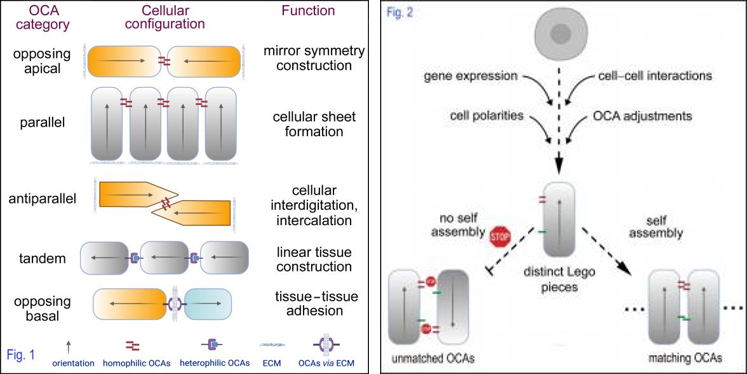
We are interested in how polarity genes regulate tissue morphogenesis and maintenance via cell adhesion. Based on our prior work, we recently proposed the concept of “orientational cell adhesions (OCAs)” to couple cell orientations with cell adhesions (Fig.1). OCAs refer to cell–cell, and cell–matrix–cell adhesions that define distinct orientational intercellular relationships, i.e., the relative orientations of the intrinsic polarities of coalesced cells. OCAs can be classified according to the distinct orientational intercellular relationships that they define, such as opposing apical, parallel, antiparallel, tandem, or opposing basal OCAs. OCAs complement conventional adhesions by emphasizing different aspects of cell adhesions.

Stemming from the OCA concept, we further proposed “the Lego hypothesis of tissue morphogenesis”, which states that the topographical properties of cell surface adhesion molecules can be dynamically altered and polarized by regulating the spatiotemporal expression and localization of OCA molecules cell- autonomously and non-cell-autonomously, thus modulating cells into unique Lego pieces for self- assembling into distinct cytoarchitectures (Fig. 2). The Lego hypothesis demystifies tissue morphogenesis and simplifies it as a self- assembling process via OCAs.

While the OCA concept and the Lego hypothesis  are yet to be broadly recognized by the field. They offer a new perspective for us to study how cell adhesions regulate tissue morphogenesis and maintenance.

Research directions

To better understand the molecular and cellular mechanisms by which OCAs regulate cellular pattern formation in tissue morphogenesis and maintenance, we are conducting research in four directions as described below by using zebrafish as our model.

(1) Synapse development and wiring. Cone and rod photoreceptors develop distinct synaptic terminals—pedicles and spherules—to wire properly with downstream neurons for normal vision. The mechanisms underlying their morphogenesis and connectivity are unclear. We study how polarity proteins regulate photoreceptor synaptogenesis and wiring through tandem OCAs. This research will provide insight into improving photoreceptor development and wiring in cell transplantation therapies, which offer hope for curing photoreceptor-based blindness.

(2) Neural tube closure. Neural tube closure defects (NTDs) lead to lethal anencephaly and  debilitating spina bifida. The molecular basis for NTDs is not fully understood. We study how apical parallel, antiparallel, and opposing OCAs regulate neural tube closure and how the process is affected by genetic defects and adverse environmental factors. Our research will facilitate the development of new strategies for the diagnosis and prevention of NTDs.

(3) Retinal polarity gene transcription. Cell-type-specific expression of polarity genes is essential for proper cellular patterning of the neural retina. However, it is unclear how polarity genes are differentially expressed among various types of retinal cells. We study the regulation of polarity gene transcription at three levels: cis, trans, and nuclear spatial organization. The significance of this study goes beyond retinal morphogenesis and vision because polarity genes are essential for all tissues.

(4) Intervertebral disc homeostasis. Degenerated intervertebral discs (IVDs) can deform and press the surrounding spinal cord and nerves, thus causing back and neck pain, which affects  two-thirds of people. The etiologies of IVD degeneration are not clear and there is no cure. One critical tissue affected in degenerated IVDs is the nucleus pulposus (NP). We study how random OCAs regulate NP cellular organization and gene expression for NP maintenance. Our work has the potential to inspire new strategies for preventing and treating IVD degeneration.

Representative publications

1. X. Wei, J. Samarabandu, R.S. Devdhar, A. Siegel. R. Acharya, R. Berezney. (1998) Segregation of transcription and replication sites into higher order domains. Science. 281:1502-1505.  DOI:10.1126/science.281.5382.1502

2. X. Wei, S. Somanathan, J. Samarabandu and R. Berezney. (1999). Three-dimensional visualization of transcription sites and their association with splicing factor-rich nuclear speckles. Journal of Cell Biology 146:543-558. DOI:10.1083/jcb.146.3.54

3. X. Wei, and J. Malicki. (2002). nagie oko, encoding a MAGUK-family protein, is essential for cellular patterning of the retina. Nature Genetics. 31:150-157. DOI:10.1038/ng883

4. J. Zou, K. Lathrop, M. Sun, X. Wei. (2008) Intact RPE maintained by Nok is essential for retinal epithelial polarity and cellular patterning in zebrafish. Journal of Neuroscience. 28(50):13684 -13695.  DOI:JNEUROSCI.4333-08.2008

5. X. Yang, J. Zou, D. Hyde, L. Davidson, and X. Wei. (2009) Stepwise maturation of apicobasal polarity of the neuroepithelium is essential for vertebrate neurulation. Journal of Neuroscience. 29:11426-11440.JNEUROSCI.2009

6. J. Zou, X. Wang, and X. Wei. (2012) Crb apical polarity proteins maintain zebrafish retinal cone

mosaics via intercellular binding of their extracellular domains. Developmental Cell. 22, 1261-1274. DOI:devcel.2012.03.007

7. W. Fang, C. Guo, X. Wei. (2017) Rainbow Enhancers Regulate Restrictive Transcription in Teleost Green, Red, and Blue Cones. Journal of Neuroscience. 37(11):2834-2848.  A cover story.  DOI:10.1523/JNEUROSCI.3421-16.2017

8. C. Guo, J. Zou, Y. Wen, W. Fang, DB. Stolz, M. Sun, X. Wei. (2018) Apical Cell-Cell Adhesions Reconcile Symmetry and Asymmetry in Zebrafish Neurulation. iScience. 3:63-85.   A cover story. DOI:10.1016/j.isci.2018.04.007

9. C. Guo, C. Deveau, C. Zhang, R. Nelson, X. Wei. (2020) Zebrafish Crb1, Localizing Uniquely to the Cell Membranes around Cone Photoreceptor Axonemes, Alleviates Light Damage to Photoreceptors and Modulates Cones' Light Responsiveness. Journal of Neuroscience. 40(37):7065-7079.  A cover story.   DOI:JNEUROSCI.0497-20.2020

10. L. Zhang, X. Wei. (2022) The Roles of Par3, Par6, and aPKC Polarity Proteins in Normal Neurodevelopment and in Neurodegenerative and Neuropsychiatric Disorders. Journal of    Neuroscience. 15;42(24):4774-4793.JNEUROSCI.2022

11. L. Zhang, X. Wei. (2022) Orientational cell adhesions (OCAs) for tissue morphogenesis. Trends in Cell Biology. 32(12): 975-978. DOI:10.1016/j.tcb.2022.07.002

12. L. Zhang, X. Wei. (2025) The Lego hypothesis of tissue morphogenesis: stereotypic organization of parallel orientational cell adhesions for epithelial self-assembly. Biological Reviews 100:445- 460. DOI:10.1111/brv.13147

13. Y. Wen, J. Zou, W. Fang, M. Sun, DB. Stolz, and X. Wei. (2025) Conservation in geographical utilization of distinct nuclear chromatin architectures in the vertebrate retinas: A proposed visual adaptation. Molecular Neurobiology. In press.


更多最新博士后招收資訊請關(guān)注:

【高才博士后】網(wǎng)站→https://boshihou.gaoxiaojob.com

公告熱度
解鎖詳細分析
該公告在同類公告中的熱度為 ***,目前已有 *** 對其非常感興趣
高校人才網(wǎng)
百萬碩博人的擇業(yè)平臺
高校直招
5000+單位官方入駐
簡歷直投
30W+職位一鍵投遞
{{applyDialogData.systemTips}}
{{applyDialogData.resumeTips}}
+ 上傳
+ 上傳文件
立即續(xù)費
{{successContentUp}}
{{successContentDown}}
我知道了
{{ title }}
{{tips1}}
{{tips2}}
{{ title }}
{{tips1}}
{{tips2}}
{{ title }}
{{tips1}}
{{tips2}}
{{ title }}
職位投遞成功!
微信掃碼關(guān)注【高才-高校人才網(wǎng)服務(wù)號】

求職效率翻倍

實時接收投遞反饋
精彩活動搶先知曉
為你推薦
TOP